Living Rooms
5 Designer Rules
that make any living room feel expensive.
The Editors · July 2026 · 6 min read
Expensive-feeling rooms are rarely the ones that cost the most. They are the ones composed with discipline — a small number of good decisions, repeated with conviction. These are the five we keep coming back to.
Rule 01
Anchor the room in one heavy, honest material.
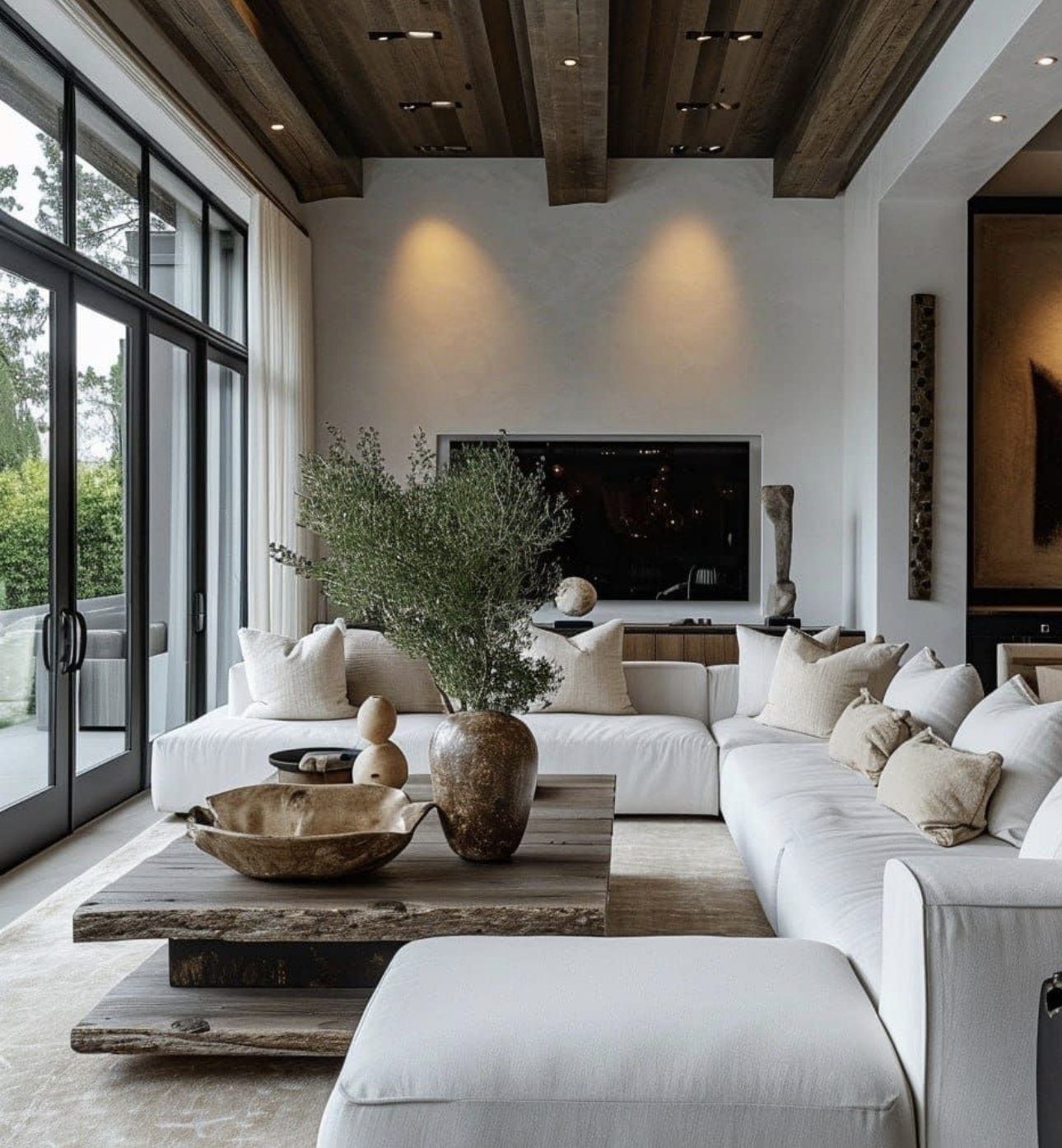
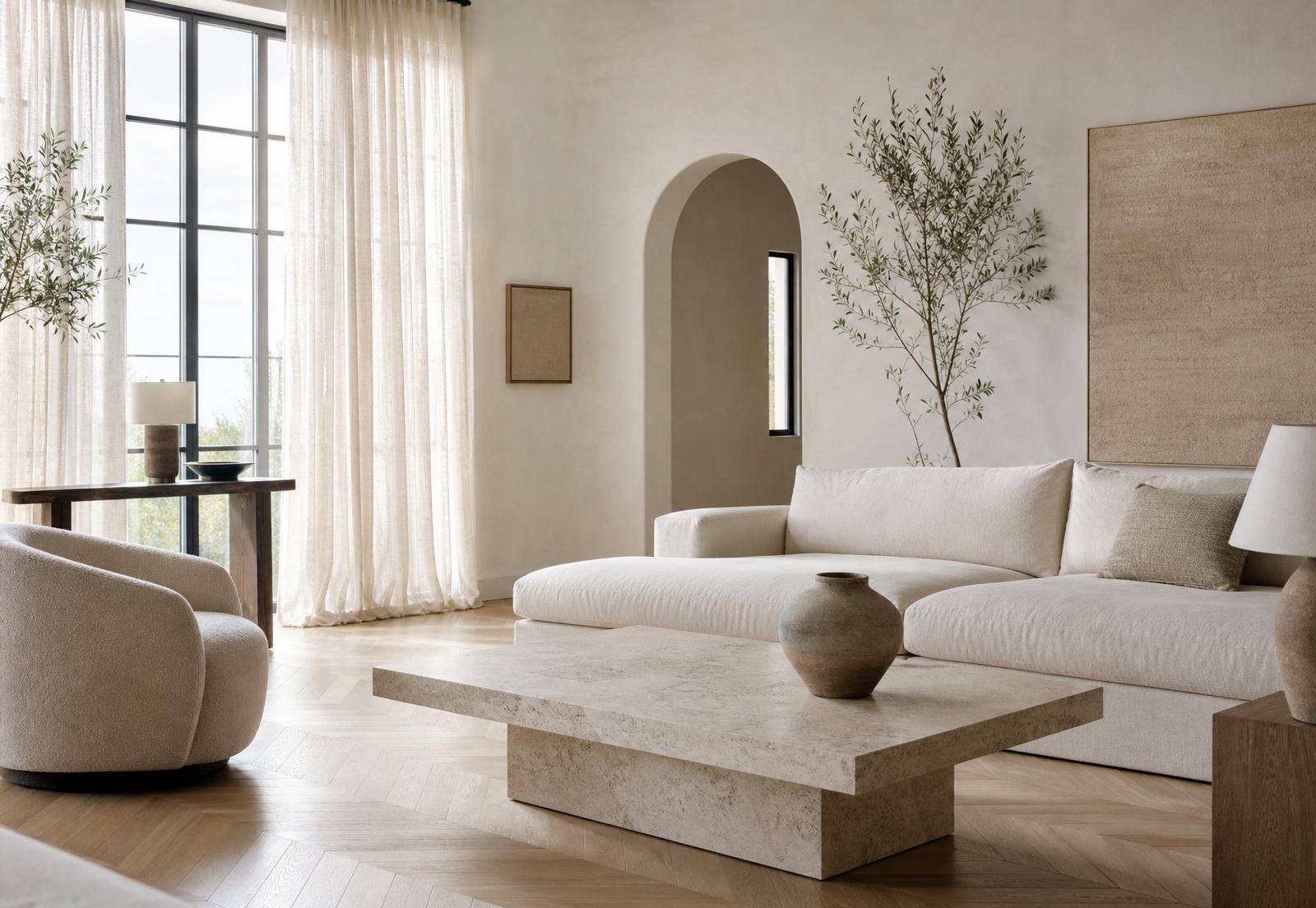
Expensive rooms almost always have one grounding element that feels like it has always been there — a honed travertine coffee table, a plaster fireplace, a solid oak console. It is the piece the eye lands on first and returns to last.
Choose one anchor per room and let everything else stay quiet in response. The material should be honest — real stone, real wood, real plaster — because the eye reads authenticity faster than it reads style.
“One heavy, honest thing is worth ten styled ones. Buy the anchor first, and the room composes itself.”
Rule 02
Commit to a single, closely-held neutral palette.
The rooms that feel most expensive rarely have more than four colors — bone, oat, mushroom, walnut — and they stay inside that family with discipline. What changes is the material: linen, boucle, stone, oak, plaster.
If a piece does not sit inside the palette, it does not come into the room. That single rule solves ninety percent of what makes a space feel busy.
“Restraint is the most expensive thing you can put in a room.”
Rule 03
Layer three textures — and stop there.
Texture is what keeps a neutral room from going flat, and it is also what tips a room into looking cluttered. The move is to pick three and repeat them: a nubby boucle, a washed linen, and a honed stone. Or a stonewashed cotton, a woven wool, and a smoked oak.
Repeat those textures across the sofa, the pillows, the throw, the rug, the accessories. The eye reads it as a considered composition, not a collection.
“Texture is the quiet luxury of a neutral room. Choose three and use them everywhere.”
Rule 04
Light the room in layers — never overhead alone.
A living room lit by a single overhead fixture will always read cheap, no matter what is in it. Expensive rooms use three sources of light: a table lamp at seated eye level, a floor lamp reading over a chair, and a picture light or sconce washing a wall or piece of art.
Warm bulbs, always. Dimmers, always. The room should be lit for the hour you are actually in.
“Overhead light is for chores. Everything else — the sofa, the reading chair, the moment — belongs to a lamp.”
Rule 05
Leave more negative space than feels comfortable.
The single most reliable way to make a room feel expensive is to leave it a little emptier than you think you should. A clear stretch of coffee table. A console with one object on it. A wall left blank so the art beside it can breathe.
The room needs room. Trust the discipline of subtraction — you can always add later, and you almost never will.
“Negative space is the most expensive thing in the room. Leave it.”
Share this entry
Shop the
Collected Family Room.
The travertine, the boucle, the layered linen — the exact pieces behind the five rules, edited into one quietly considered room.
Shop the room